Score Hunter
A football match companion that brings live and upcoming fixtures, match predictions, prediction history, user statistics, and rankings into a Flutter mobile application backed by a dedicated TypeScript API.
Technologies
- Flutter
- Dart
- TypeScript
- Express
- Prisma
- MySQL
- Firebase Authentication
- SQLite
- Zod
- Swagger
- Jest
On this page
About the project
Score Hunter is a football match companion built as a Flutter mobile application and a dedicated TypeScript backend called SiGolekAPI. Together, the two repositories form one system for following fixtures, making match predictions, and tracking the outcome of each prediction.
The mobile application gives users a focused interface for live and upcoming matches, prediction categories, active guesses, completed results, profile statistics, and rankings. SiGolekAPI supplies the match data and odds while managing users, predictions, synchronization, and result validation.
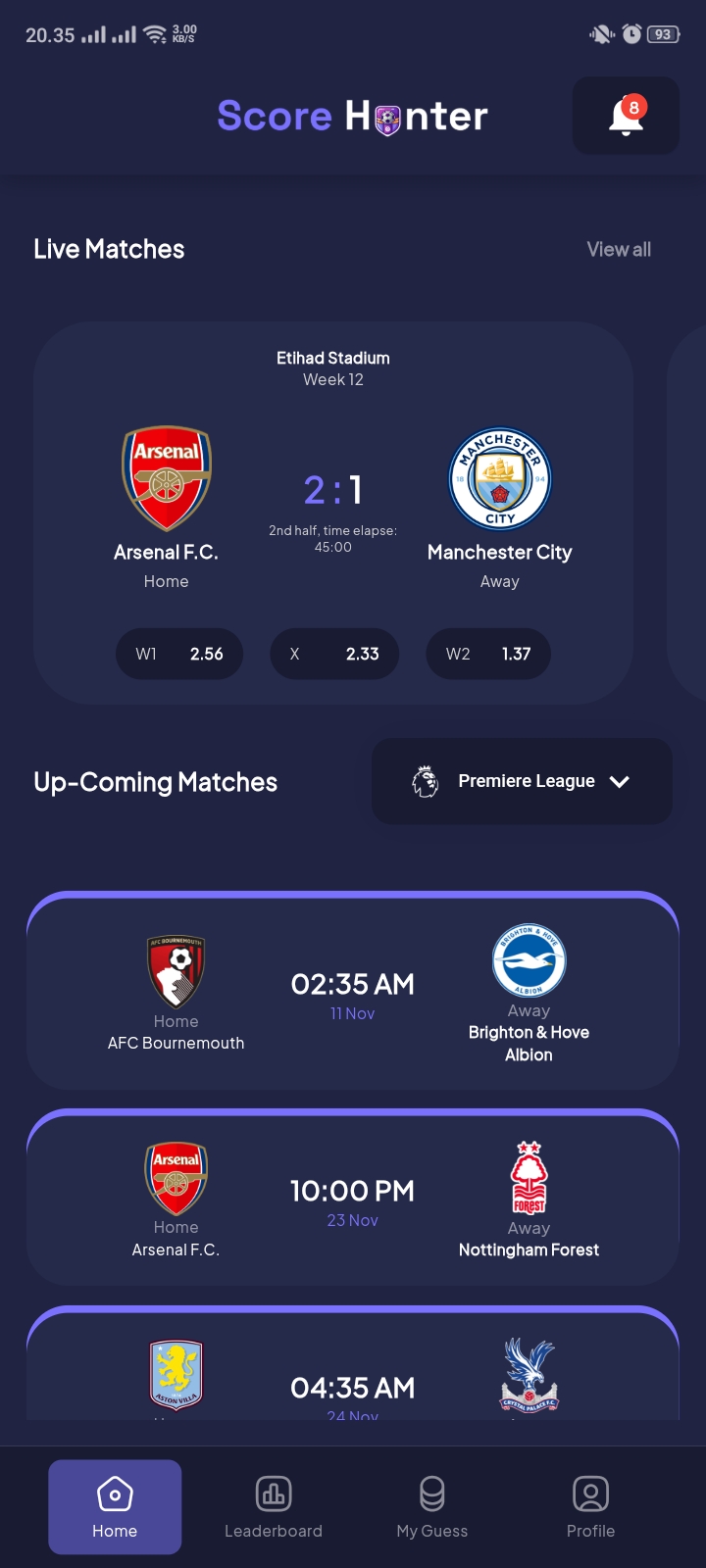
Live and upcoming matches
The home screen separates live or recently completed matches from upcoming fixtures. Each match presents its teams, kickoff information, stadium, score, and available odds. Pagination lets the application load more match data as a user continues browsing.
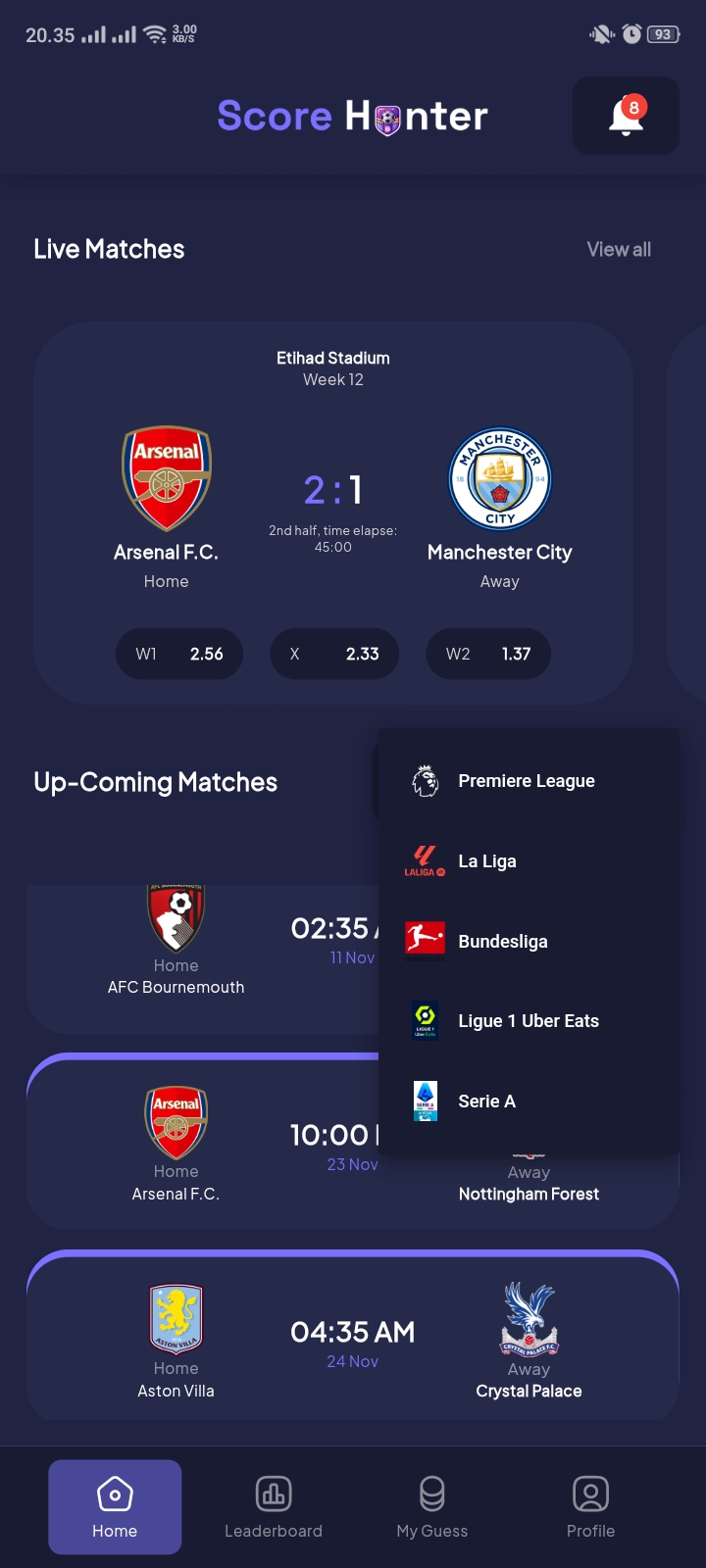
Users can narrow the upcoming schedule by competition. The interface covers the Premier League, La Liga, Bundesliga, Ligue 1, and Serie A without moving the user away from the main fixture list.
Match prediction flow
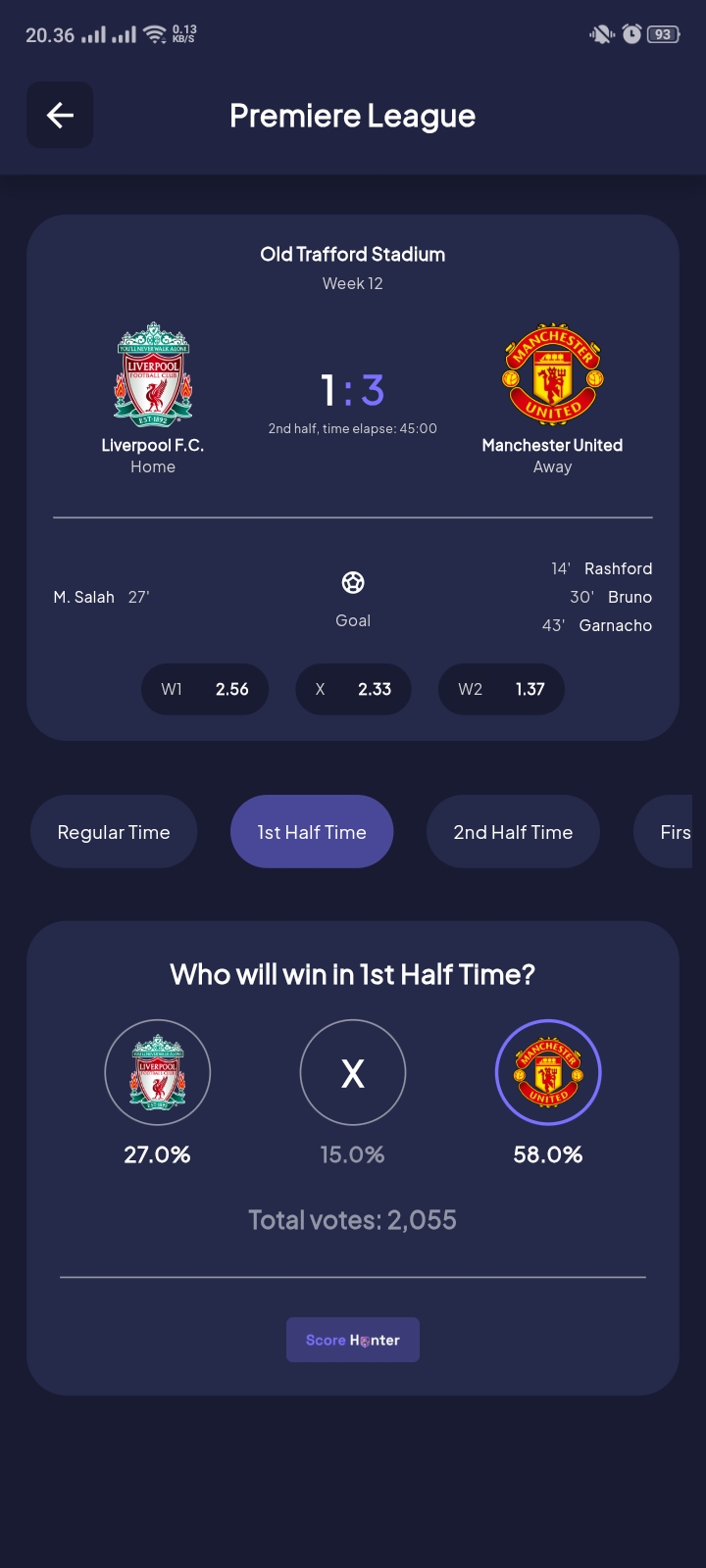
A match detail screen connects the current score and goal events with a set of prediction choices. Users can predict the regular-time result, the first-half result, the second-half result, or which team records the first event. The screen also shows the distribution of submitted votes for the selected category.
When a user submits a prediction, the API records its match, category, answer, user, and expected match window. It rejects a second prediction by the same user for the same match and category, keeping each selection unambiguous.
Tracking prediction outcomes
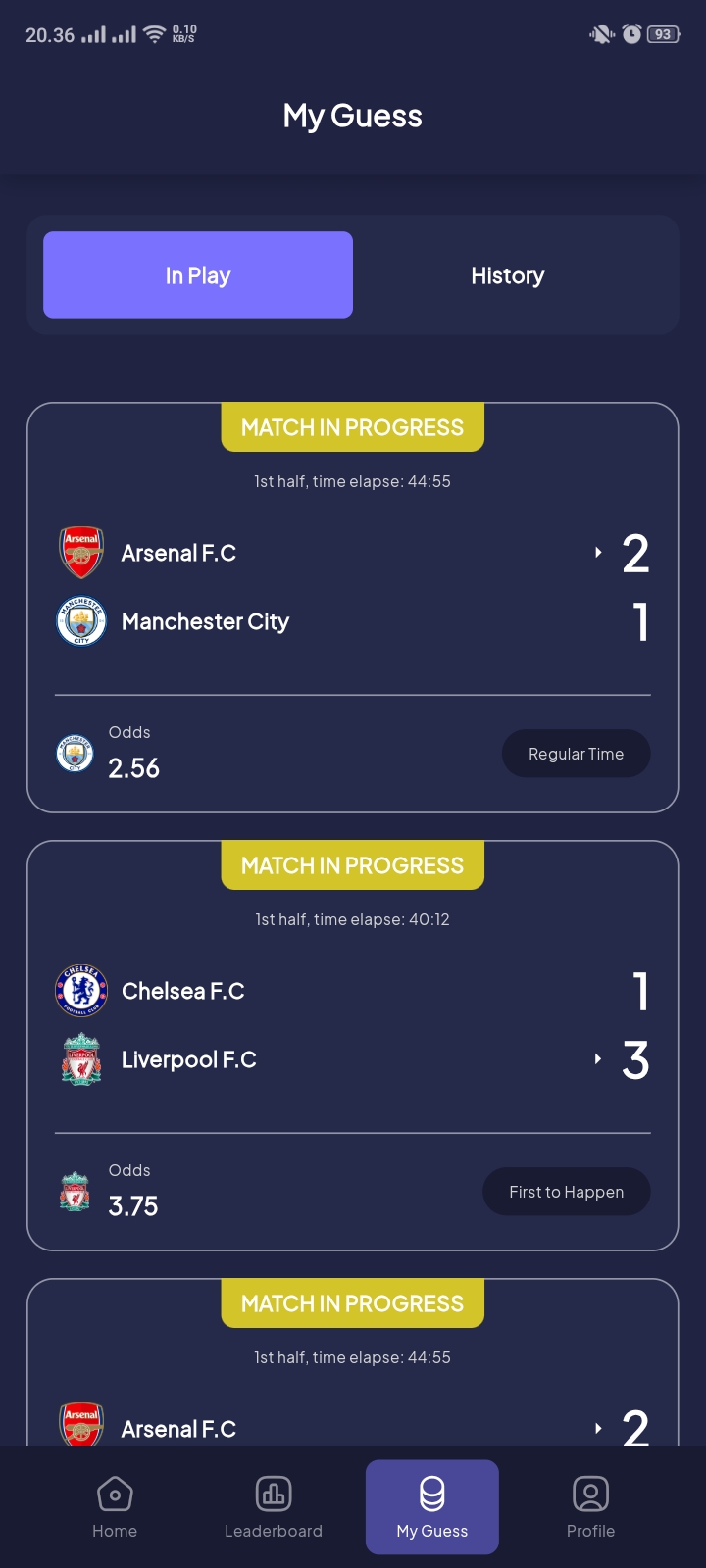
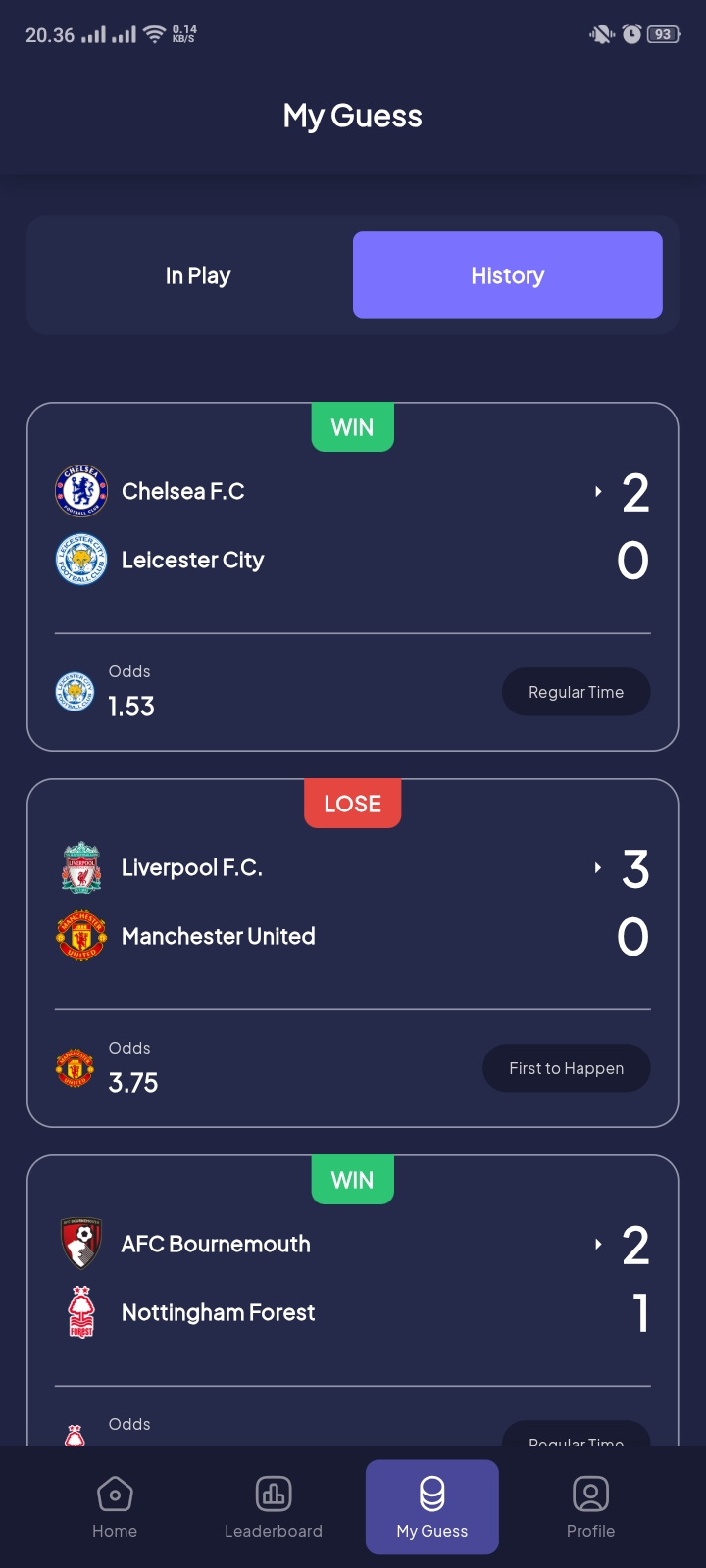
The My Guess workspace separates predictions that are still in play from completed history. Active entries display the current match state, elapsed time, score, selected odds, and prediction category so users can follow an open prediction without returning to the match browser.
After synchronization checks a completed match, the API compares the stored answer with the final match data. The history view then labels the prediction as a win or loss and preserves the teams, final score, odds, and category that formed the original selection.
Profiles and leaderboard
Firebase Authentication supports Google sign-in on the mobile application. SiGolekAPI creates or updates the corresponding user record and stores the Firebase token used by authenticated endpoints. The application also keeps the token locally with SQLite and sends it when requesting personal or prediction data.
Each profile summarizes total predictions, wins, losses, and win rate. A leaderboard groups correct predictions by user and ranks participants by their result count, while also returning the current user’s position.
Backend data pipeline
SiGolekAPI uses Express controllers and services to expose fixtures, match details, stadium information, odds, vote totals, user data, prediction history, and rankings. It obtains football data from FotMob, transforms the responses for the mobile application, and stores selected league, match, and odds data in MySQL through Prisma.
Short-lived database caching reduces repeated upstream requests for active match data. Finished matches can reuse their stored result, while scheduled synchronization checks unresolved predictions and updates each one after its match finishes. Zod validates user and prediction requests, and authenticated routes require the user’s API token.
Architecture
The Flutter application communicates with SiGolekAPI over HTTP. Firebase provides Google identity, while local SQLite storage and response caching keep session and frequently used mobile data available between requests.
On the backend, Express handles routing and middleware, service classes contain the football and prediction workflows, and Prisma connects the services to MySQL. An OpenAPI document powers Swagger documentation, and Jest with Supertest covers the user and football API behavior.